
Peace Corps Senegal: How to Make an A-Frame Level
Description
Peace Corps Senegal teaches you how to construct and utilize an A-frame level. Shot & edited by PCV Caitlin Healy & RPCV Andrew Oberstadt Demonstrated by RPCV Austin Peterson "An A-Frame is a simple tool used to locate two level points on a landscape and measure meter-wide distances. A-frames are typically used for water harvesting and erosion control techniques such as berms and swales, check dams, and contour planting. Today, Urban Agriculture Volunteer Austin Peterson is going to show us how to make an A-Frame. A-Frames are constructed using 2 one and a half meter sticks, 1 one meter stick, 4 lengths of cord, 1 fist-sized rock, and a knife or marker. Make sure to have 2 partners on hand. Select sticks that are straight and free of knots. If the sticks are green when cut, strip the bark so that the A-Frame joints do not become loose with use. Cut the ends of the one and a half meter sticks so that they are at a rough 45 degree angle. This way they will have good contact with the soil surface. If they are too sharp they will dig into the earth and create an inaccurate read. Stand the legs up so that the tops cross and the feet stand flat on the soil. Attach the poles together by lashing them with the cord 1. Hold the cord with the short end in one hand and the long end in the other. 2. Wrap the cord around both sticks without crossing them. 3. When the cord is back on your side, tie the ends together making sure to leave one long length. 4. Take the remaining long end and wrap it around the tied cord between the sticks. 5. Every time you complete a pass make sure to pull as tightly as possible. 6. You know you are wrapping the lashing tight enough when the edges of the cord begin to cinch into the sticks. 7. After you have made 6 or 7 passes, tie off the cord on one of the sticks using two half hitches. Place the crossbar on the ground between the feet to ensure that they are a meter apart. Raise the crossbar until it’s about halfway between the ground and the top of the A-Frame. Have a partner hold the crossbar in place and attach it using the lashing technique. Once the A-Frame is lashed together, test it to make sure there are no loose joints. Next, take a meter long piece of cord, tie it around the rock on one end. Loosely tie the free end around the top joint of the A-Frame. Make sure the rock hangs low enough under the crossbar that it can be wrapped around the bar at least once, but not more than two times. Make sure the rock is hanging between the legs and the crossbar. The angle of the A-Frame is important. If the cord touches the crossbar it will not give you an accurate read. To calibrate the A-frame place the feet on two visibly unlevel points. Wait for the rock to come to a resting point. Use a knife or marker to mark this point. Use two partners to mark the precise placement of the feet in the soil. Lift the A-Frame and spin it 180 degrees. Place the feet in the exact same spots and wait for the rock to settle. Mark the point. Mark the point exactly halfway between those two outer marks. This is now your level point. In Senegal we use A-Frames in three distinct ways: to measure any distance in meter units, to level berms and check dams, and to find the contour on a landscape."
 13:07Learn how to Make a Bunyip Water Level with Brad LancasterSustainableWorld
105K views
 5:30Terrace Gardens and bunyipCourtney Jarman
127 views
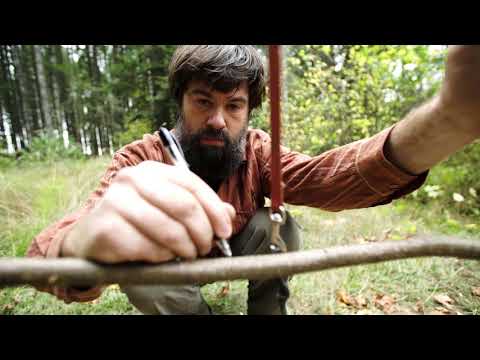 4:44Making and Using an A-frame LevelOregon State University Ecampus
24.9K views
 4:07Before the Water Harvesting Earthworks ProjectGreen Abundance By Design
176 views
 16:55It's NOT WORKING Right! Half of the Swale Isn't Catching Water (Step 3)Tiny Shiny Home
36.5K views
 8:33Brad Lancaster Watershed Demonstration on the BeachSustainableWorld
2.9K views
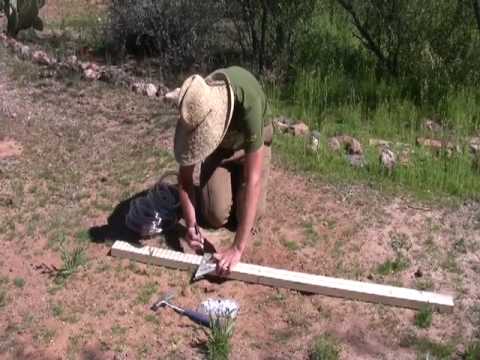 9:14How to Build a Water Levelzhiniibones
92.4K views
 11:42Old man trail pt 5 - designing for water, contour, windCanadian Permaculture Legacy
3.3K views
 17:48Why Rivers MovePractical Engineering
3.3M views
 5:58Installing a new adjustable water harvesting permaculture swale on contour part 1: Marking out.Cairn Of Dunn Croft Permaculture
1K views
 8:54Make an A-Frame Level to Install SwalesHomestead DIY
20.1K views
 6:03How To Find Grade | Drainage And LandscapingEveryday Home Repairs
909K views
 3:22Managing Water Flow with Topographical Data - LIVE CONSULTATION [LISTEN IN]Off-Grid with Curtis Stone
2.2K views
 6:25How to Establish a Level-Grade Line for Landscaping | This Old HouseThis Old House
2M views