
What is DAO in Crypto ? How Do DAOs Work? (Explained by Animation)
Description
Twitter: https://twitter.com/andcrypto_ In DeFi, almost every project has a DAO. DAO, or Decentralized Autonomous Organization, is one of the most popular crypto systems and represents one of the most innovative developments in decentralized finance. Decentralized organizations are structures less complicated than it might seem: consider them as a replacement for traditional organizations, where actions are automatized, rules are pre-set and must be respected, people have participation and voting rights according to the number of tokens they own — and this makes it possible to participate anonymously. Throughout this article we’ll review all aspects of DAO, from what it is to the pros and cons. What are Decentralized Autonomous Organizations? DAO stands for decentralized autonomous organization. The name says it all: the meaning of DAO can be found in all those groups of people coming together to accomplish a common goal. These, in very simple terms, are DAOs. These organizations are internet-based and people who participate don’t necessarily need to know each other — in line with one of the main principles of DeFi, privacy. The focus is on decentralization: cryptocurrencies are by nature decentralized assets, and a group of people, inspired by this kind of distribution, came up with the idea to use decentralization not only for financial assets, but also to replace traditional organizations — but we will talk about this group of people later. However, also some CEXs are developing their own DAOs — so, this kind of organization might not be limited to DeFi in the future. Everyone who joins a DAO has a common purpose, and may not necessarily have anything to do with financial institutions: there are countless DAOs that do anything from collect NFTs to manage charities. The most significant feature of these organizations is that there are no leaders: every participant can vote on proposals and decide on the future of the organization. As part of the DeFi space, the backbone of these organizations is represented by smart contracts. A DAO is created from a smart contract that not only sets rules, but also collects funds to reach a common goal. For more information on smart contracts, please go to my channel and found the video with what is smart contract title . A DAO is actually self-funded, in the sense that each participant contributes to the treasury of the organization. But there are different kinds of self-financing: DAOs can be token-based: anyone can buy the crypto that fuels the organization and become a member, and will have voting rights according to the amount of tokens they own. These DAOs are usually fully permissionless You can also join a share-based DAO by submitting an application. If the application is accepted by the community, you’ll be asked to purchase a minimum amount of tokens, and you’ll have voting rights according to the number of tokens you have. A very popular DAO, Friends With Benefits, is an example of a share-based DAO. But to better understand how it’s possible to manage an organization without any central authority, let’s have a look at the elements that make up a DAO and how it works. How Do DAOs Work? First off, let’s see how a DAO is made. These are the elements common to any DAO: Structure to reach the common goal: this first step is of course dependent on someone having an idea, so there is always a team or individual behind the project. The organization needs to set a goal, think about the rules that will govern the organization, the budget that may be required, how to reward participants, what should be the characteristics of the token used, and how to pass proposals. Smart contracts: as we said, they are the backbone of the whole DeFi space. These pieces of code allow developers to set rules that, if not met, would prevent any blockchain-based operation from being executed and finalized. Smart contracts not only contain the rules that will manage the organization, but also allow for the creation of the token that will be used by the DAO. Treasury: any project requires funds. DAOs issue crypto tokens that will be used to attract investors: they will represent the part of the treasury owned by each participant, as well as the allocation of voting rights. Community: people can participate in DAOs according to the structure of the organization — as we mentioned, DAOs can be either permissionless or ask for applications that need the approval of the other participants. Participants will be able to make decisions concerning the DAO, to approve proposals or new participants, or decisions on how to spend the funds of the organization. #Crypto #DeFi #DAO #andcrypto
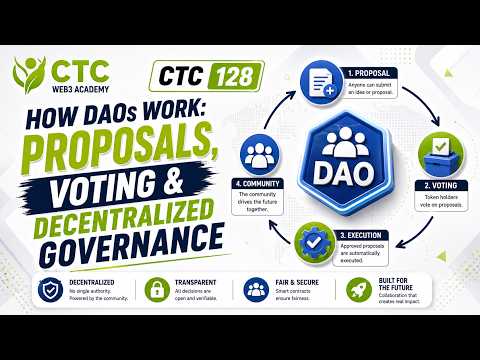 3:00How DAOs Work: Proposals, Voting & Decentralized Governance | CTC 128CTC Web3 Academy
690 views
 14:19Crypto DAO's ExplainedCrypto Renegade
423 views
 6:08What is a DAO? | Crypto Billion Dollar ConceptMaktub
86 views
 3:45DAOs & Governance Explained: How Blockchain Communities Make Decisions 🏛️HSZB Technologies
24 views
 7:18Blockchain Infrastructure for Intentional Communities and Regenerative EconomiesEcoHubs Community
19 views
 18:09Who Changes a Blockchain's Rules? Tezos Governance ExplainedStrange Details
10 views
 4:36On-chain governance of the MIMHO ecosystem: DAO and Voting Controller.MIMHO_Official
3 views
 4:25How Crypto Project Changes Are Made!! Onchain VS Offchain Governance EXPLAINEDCoinGecko
3.1K views
 7:18DAO vs C Corp: What is a DAO & How It Workskuntal.web3
15 views
 13:39Making Decisions in a DAO: Gitcoin Lessons Learned with Annika LewisETHDenver
328 views
 21:50Growing & Securing Networks What’s Next for Onchain Governance - Anthony LeuteneggerETHGlobal
52 views
 4:18DAO Use Cases Explained: Governance, Communities & Web3 | CTC 129CTC Web3 Academy
563 views
 52:26'Value of on-chain governance' | Panel | Ethfinex Governance Summitrhinofi
61 views
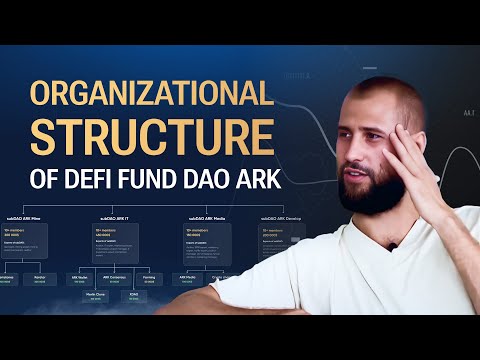 5:21How the most active DAO worksDAO ARK eng
66 views